Surviving the Two-Week Wait: Science, Symptoms, and Self-Care


Surviving the Two-Week Wait: Science, Symptoms, and Self-Care
If you're trying to conceive, the two-week wait (TWW) is often described as one of the most emotionally challenging phases of the fertility journey. The period between ovulation and your next expected period — during which implantation either does or doesn't occur, and a pregnancy either does or doesn't establish — can feel like an eternity of uncertainty.
This guide covers everything you need to know about the TWW: what's actually happening biologically during these 10–14 days, what symptoms you might experience, how to interpret them (and their limitations), when to test, and evidence-based strategies for protecting your mental health during this period.
What Is the Two-Week Wait?
The "two-week wait" refers to the luteal phase of the menstrual cycle — the period between ovulation and either the start of the next period or a positive pregnancy test. The term has become a widely used concept in fertility communities to describe the waiting period that follows timed intercourse or fertility treatments.
In clinical terms, the luteal phase typically lasts 10–16 days, with an average of 14 days. It begins immediately after ovulation and ends either with menstruation (if pregnancy does not occur) or continues if a fertilised egg successfully implants and begins producing hCG (human chorionic gonadotropin — the hormone detected by pregnancy tests).
For those undergoing fertility treatment (IVF, IUI), the TWW follows the egg retrieval or insemination procedure and often concludes with a blood test rather than a home pregnancy test, typically at 10–14 days post-transfer or insemination.
The Biology of the Luteal Phase
Supporting You Through Every Cycle
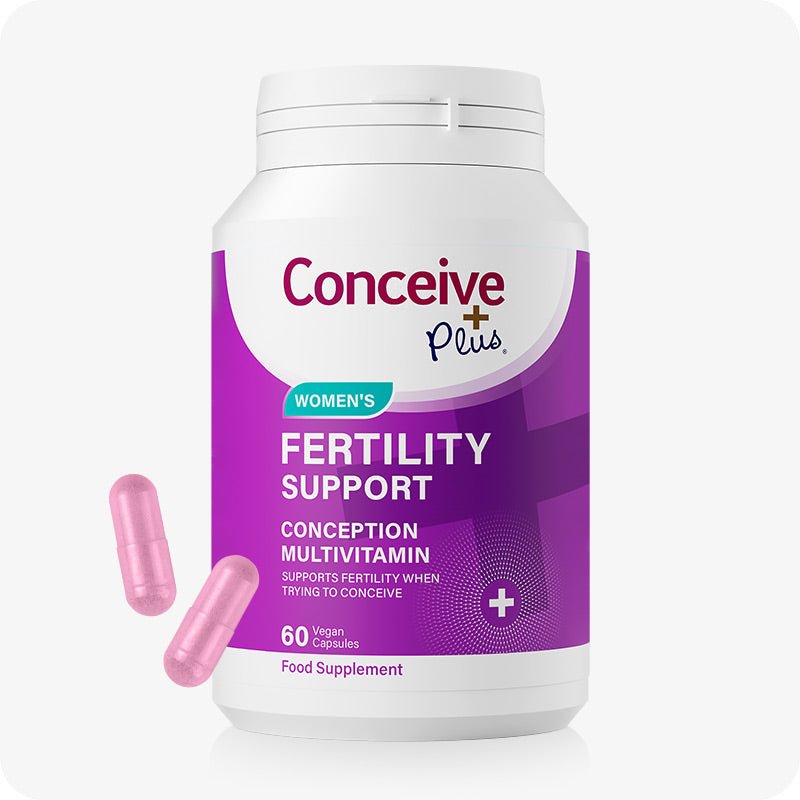
While you wait, continue giving your body the nourishment it needs. Conceive Plus Women's Fertility Support and Prenatal vitamins provide the folate, vitamin D, and essential nutrients that support early embryo development — whenever conception does occur.
Explore Women's Support →Understanding what's happening in your body during the TWW can make the experience feel less like a black box. Here's what occurs at each stage:
Days 1–3 Post-Ovulation: Fertilisation (If It Occurs)
After ovulation, the released egg travels down the fallopian tube toward the uterus. If sperm are present, fertilisation typically occurs within 12–24 hours of ovulation in the ampullary region of the fallopian tube. Not every cycle results in fertilisation even with correctly timed intercourse — the estimated per-cycle fertilisation rate in healthy young couples is approximately 15–25%.
Days 3–5: Embryo Development
A successfully fertilised egg (now called a zygote, then an embryo) divides repeatedly as it travels toward the uterus. By days 3–5, it reaches the morula stage (16–32 cells) and then the blastocyst stage (60–120 cells), during which it begins to differentiate into cells that will form the embryo and the placenta.
Days 6–10: Implantation
The blastocyst arrives in the uterine cavity and begins the process of implantation — burrowing into the endometrium (uterine lining). This is a critical step that requires both a competent blastocyst and a receptive endometrium. Implantation typically occurs between 6–10 days after ovulation (DPO), with peak implantation occurring around 8–10 DPO. Some research suggests approximately 10% of implantations occur as late as day 11–12 DPO.
Days 9–12: hCG Production Begins
Once the blastocyst implants, the outer cells (trophoblast) begin producing hCG. This hormone signals to the corpus luteum (the temporary structure formed in the ovary after ovulation) to continue producing progesterone rather than declining. hCG levels initially double approximately every 48–72 hours, eventually reaching levels detectable by sensitive home pregnancy tests.
Day 14 (Approximately): Test Day or Menstruation
If implantation has not occurred, the corpus luteum degenerates, progesterone levels fall, and the endometrium sheds — the start of the next period. If implantation has occurred, rising hCG supports the corpus luteum, and a pregnancy test can detect hCG at this point in most cases.
TWW Symptoms: What Is and Isn't Significant
This is where much of the anxiety of the TWW originates. Because progesterone rises after ovulation regardless of whether conception has occurred, many "pregnancy symptoms" are actually progesterone symptoms — experienced in every luteal phase, including non-conception cycles.
Common Luteal Phase Symptoms (Progesterone Effects)
These symptoms occur in virtually every cycle, whether or not conception has occurred:
- Breast tenderness or fullness
- Bloating
- Mild cramping
- Fatigue
- Mood changes
- Food cravings or aversions
- Constipation
- Mild headaches
Implantation Bleeding
Approximately 25–30% of women experience light spotting or bleeding around the time of implantation (typically 10–14 days after ovulation). This "implantation bleeding" is usually lighter, shorter, and a different colour (pink or brown rather than red) compared to menstrual bleeding. However, many women also experience spotting in non-conception cycles, making this symptom unreliable as a standalone indicator.
Symptoms More Specific to Pregnancy
While no symptom is definitively diagnostic before a positive test, some symptoms become more pronounced when pregnancy has established:
- Stronger-than-usual breast tenderness and fullness
- Heightened sense of smell
- Unusual fatigue (often described as more extreme than typical PMS)
- Nausea (typically begins around weeks 4–6 of pregnancy, so late in the TWW or just after)
- Frequent urination (also typically more prominent in early pregnancy than in the luteal phase of non-conception cycles)
Importantly: the absence of symptoms does not indicate that pregnancy has not occurred. Many women report no noticeable symptoms in successful conception cycles, while others report strong symptoms in cycles where they are not pregnant.
The Limitation of Symptom Interpretation
A 2012 review in the journal Human Reproduction examined whether early pregnancy symptoms could reliably predict pregnancy before a test result. The conclusion was that no symptom pattern was sufficiently specific to distinguish pregnancy from a non-conception luteal phase. The only reliable indicator during the TWW is a pregnancy test.
When to Take a Pregnancy Test
The timing of pregnancy testing is a source of much confusion and frustration during the TWW. Here's what the science says:
How Pregnancy Tests Work
Home pregnancy tests detect hCG in urine. Most standard tests detect hCG at ≥25 mIU/mL; more sensitive tests detect hCG at ≥10–15 mIU/mL. Early response tests (including some marketed specifically as early detection) can detect hCG as early as 6–8 days post-ovulation (DPO), though at this stage many pregnancies have hCG below the detection threshold.
The Recommended Testing Window
For most women, testing on the first day of the expected period (typically around 14 DPO) provides the most reliable result. A 2022 study published in Contraception found that:
- At 10 DPO, sensitive tests detected pregnancy in approximately 35% of eventual pregnancies
- At 12 DPO, this rose to approximately 68%
- At 14 DPO, approximately 97% of pregnancies were detected
Testing too early not only risks a false negative (creating false reassurance or continued uncertainty) but can also cause unnecessary distress if what appears to be a negative test at 8 DPO is actually a pregnancy too early to detect.
First Morning Urine Is Most Reliable
hCG is most concentrated in the first morning void, as urine has been accumulating overnight. Testing with the first morning urine gives the most reliable result, particularly at earlier time points when hCG levels are lower.
Mental Health During the Two-Week Wait
The psychological burden of the TWW is real and well-documented. A study published in Fertility and Sterility found that women undergoing fertility treatment experienced anxiety levels during the TWW comparable to women with serious medical diagnoses. For those who have experienced previous pregnancy loss or prolonged infertility, the emotional weight can be even greater.
Evidence-Based Strategies for Managing the TWW
Limit symptom-checking and internet searching. While it can feel helpful to read about others' experiences, excessive symptom-checking (often called "symptom spotting") tends to amplify anxiety without providing useful information. Many fertility counsellors recommend designating specific times for this activity rather than engaging with it continuously.
Maintain routine and structure. Continuing regular activities — work, exercise, social engagements, hobbies — provides a sense of control and normality during an uncertain period. Abandoning usual activities to "focus" on the TWW rarely improves outcomes and often worsens anxiety.
Set a test date and stick to it. Deciding in advance when you will test — and committing to that date — can help contain the urge to test earlier and earlier (and deal with potentially confusing early results). Write the date down or set a phone reminder if it helps.
Practice mindfulness and relaxation. Research published in Fertility and Sterility has shown that mind-body interventions (mindfulness, cognitive behavioural therapy, yoga) can significantly reduce anxiety and depression in women undergoing fertility treatment. The evidence for these approaches improving pregnancy rates is less conclusive, but the mental health benefits are well supported.
Connect with supportive communities. Sharing experiences with others going through similar situations — whether in person or through reputable online communities — can normalise the experience and reduce isolation. Many European fertility associations maintain patient networks and support groups.
Communicate with your partner. The TWW can create tension when partners cope differently — one person may want to talk about it constantly while the other prefers distraction. Explicitly discussing how you each cope and agreeing on how you'll communicate during this period can prevent misunderstandings.
What to Avoid During the Two-Week Wait
While there are few definitive "rules" during the TWW, some evidence-based guidance applies:
- Avoid alcohol: Until a negative test result, it's prudent to avoid alcohol, as early embryo development may be sensitive to alcohol exposure. European health guidelines recommend complete alcohol avoidance throughout all of pregnancy and during conception attempts.
- Maintain folate/folic acid supplementation: Neural tube development begins in the first 3–4 weeks of pregnancy — often before a woman knows she is pregnant. Continuing folic acid supplementation (400 mcg/day minimum, ideally 800 mcg) throughout the TWW and beyond is strongly recommended.
- Avoid extreme physical stress: Moderate exercise is safe and beneficial. However, extremely intense exercise (competition-level sport, very heavy lifting) during the TWW is sometimes cautioned against, particularly in IVF cycles where the endometrium has been stimulated hormonally.
- Don't change medications without medical advice: Some medications are contraindicated in early pregnancy. If you take regular prescription medication, discuss this with your doctor before your conception cycle.
- Avoid hot tubs and saunas: High temperatures may be harmful to an implanting embryo. Avoiding environments that raise core body temperature is a standard precaution.
After the TWW: Whatever the Result
The TWW ends in one of two ways, and both deserve acknowledgement:
If the Result Is Positive
A positive pregnancy test is wonderful news, but it's worth knowing that the first trimester remains a vulnerable time. Early pregnancy loss (miscarriage before 12 weeks) occurs in approximately 10–20% of confirmed pregnancies, most commonly due to chromosomal abnormalities in the embryo. Booking an early appointment with your midwife or doctor, continuing prenatal vitamins, and being gentle with yourself emotionally are all appropriate responses.
If the Result Is Negative
A negative result, particularly after many TWWs, can be devastating. Allowing yourself to grieve is valid and appropriate. Taking time to recover emotionally before the next cycle is also valid. If you've been trying for several months without success, speaking with your doctor about fertility evaluation is a positive, proactive step.
Frequently Asked Questions
Can stress during the TWW affect whether I get pregnant?
This is one of the most common concerns, and the evidence is nuanced. While chronic, severe stress has been associated with reduced fertility in some studies, the normal anxiety experienced during the TWW is very unlikely to prevent implantation or cause pregnancy loss. The body is designed to protect early pregnancy even under emotional stress. That said, managing stress for your own wellbeing — regardless of its impact on outcomes — is always worthwhile.
When is the earliest I can get a reliable pregnancy test result?
Most sensitive early pregnancy tests can reliably detect pregnancy at 14 DPO (the day of a missed period) or later. Some early-response tests may detect pregnancy at 11–12 DPO for some women, depending on when implantation occurred and how quickly hCG is rising. Testing before 10–11 DPO is rarely informative and often anxiety-provoking.
Is it normal to have no symptoms during the TWW?
Completely normal. Many women who successfully conceive report minimal or no noticeable symptoms during the TWW. The absence of symptoms is not a reliable indicator of a non-pregnancy cycle.
What if my period is late but the test is negative?
A late period with a negative test is worth waiting a few more days before retesting, especially if you may have ovulated later than expected. If your period is more than a week late and tests remain negative, seeing a doctor to investigate is appropriate. Causes of a late period without pregnancy include stress, thyroid issues, PCOS, and other hormonal factors.
Should I take progesterone supplements during the TWW?
Progesterone supplementation during the luteal phase is standard practice after IVF cycles and in women with documented luteal phase deficiency. In natural conception cycles, routine progesterone supplementation is not typically recommended unless a luteal phase defect has been diagnosed. Speak with your doctor if you have a history of recurrent early miscarriage or luteal phase irregularities.
Can I exercise during the TWW?
Yes. Moderate exercise (walking, swimming, cycling, yoga, light jogging) is safe and beneficial during the TWW and throughout early pregnancy. There is no evidence that moderate exercise prevents implantation or causes miscarriage. However, very high-intensity activities or those with a risk of impact or falls are often avoided in the early luteal phase, particularly after fertility treatments.
Does lying still after sex help with implantation?
There is no scientific evidence that lying still, elevating hips, or any other position after intercourse improves conception rates. Sperm reach the cervix within seconds to minutes of ejaculation regardless of position. Implantation, which occurs 6–10 days later, is similarly independent of physical position at the time of intercourse.
I experienced implantation bleeding — does that confirm pregnancy?
Not definitively. While implantation bleeding is experienced by approximately 25–30% of women who conceive, it can be difficult to distinguish from early spotting that occurs in non-conception cycles. The only reliable confirmation of pregnancy is a positive pregnancy test. Wait until your test date for clarity.
How do I cope if the TWW ends in a negative result again?
Repeated negative results are one of the most emotionally challenging aspects of fertility journeys. Allowing yourself time to grieve each month is important. Connecting with others who understand (fertility support groups, counsellors specialising in reproductive health) can be invaluable. If you've been trying for 12 months (or 6 months if over 35), speaking with a reproductive specialist is the next appropriate step — not a sign of failure, but a sign of taking active, caring steps.
Are the emotional symptoms of the TWW normal?
Completely. Anxiety, hypervigilance about symptoms, emotional swings, and difficulty concentrating are experienced by the vast majority of people during the TWW. These reactions are a natural response to genuine uncertainty about something deeply meaningful. If anxiety feels overwhelming or is affecting daily functioning, speaking with a psychologist or fertility counsellor can be enormously helpful.
Supporting You Through Every Cycle
While you wait, continue giving your body the nourishment it needs. Conceive Plus Women's Fertility Support and Prenatal vitamins provide the folate, vitamin D, and essential nutrients that support early embryo development — whenever conception does occur.
Explore Women's Support →