Fertility Supplements: A Science-Backed Guide for Women and Men Trying to Conceive


Fertility Supplements: A Science-Backed Guide for Women and Men Trying to Conceive
Fertility supplements have become one of the most discussed topics in the trying-to-conceive (TTC) community — and for good reason. Research increasingly shows that specific micronutrients play essential roles in egg quality, sperm health, hormonal balance, and implantation. Yet the supplement market is saturated with products making bold claims, leaving many couples confused about what actually works.
This guide provides a clear, evidence-based overview of the fertility supplements most supported by clinical research, what to look for when choosing them, and how Conceive Plus delivers these nutrients in scientifically formulated combinations.
Why Fertility Supplements Matter
Diet is the foundation of fertility nutrition — but it rarely provides therapeutic doses of every nutrient needed to optimise egg and sperm quality. Modern diets, food processing, soil depletion, and individual variation in nutrient absorption create gaps that supplements help fill.
Fertility supplements serve two key purposes. First, they correct deficiencies that may be silently affecting reproductive health. An estimated 40% of European adults are deficient in vitamin D, and folate deficiency remains common despite public health messaging. Second, they provide nutrients at doses that support specific reproductive processes — beyond what a normal diet typically delivers.
Both egg cells and sperm require approximately 90 days to develop. This means fertility supplements started at least 3 months before trying to conceive have the greatest potential to improve the quality of eggs and sperm available at conception.
Essential Fertility Supplements for Women
Support Your Fertility Journey with Conceive Plus
Trusted by couples worldwide, Conceive Plus products are formulated with the science of conception in mind.
Shop Conceive Plus →Folate (Methylfolate)
The most essential preconception nutrient. Folate is required for DNA synthesis, egg maturation, and prevention of neural tube defects in the early embryo. Most guidance recommends at least 400–800mcg daily, starting before conception.
Crucially, choose methylfolate (5-MTHF) over synthetic folic acid. Approximately 40% of people carry a variant in the MTHFR gene that reduces their ability to convert folic acid into its active form. Methylfolate bypasses this conversion and is bioavailable for everyone. Conceive Plus supplements use methylfolate for this reason.
Coenzyme Q10 (CoQ10)
CoQ10 is an antioxidant found in the mitochondria of every cell — including egg cells. Egg quality depends heavily on mitochondrial function, and mitochondrial efficiency declines with age. Clinical trials have shown CoQ10 supplementation improves ovarian response, egg quality, and embryo quality in women undergoing IVF, particularly those over 35.
The recommended dose for fertility is typically 200–600mg per day of ubiquinol (the reduced, more bioavailable form).
Vitamin D3
Vitamin D receptors are found throughout the female reproductive tract, including in the ovaries, uterus, and endometrium. Deficiency has been linked to reduced IVF success rates, PCOS, and endometriosis progression. A 2019 study in Human Reproduction found that women with sufficient vitamin D had significantly higher live birth rates after IVF.
Many Europeans are deficient, especially in winter months. Testing (25-OH vitamin D blood test) is recommended before supplementing, with a target level of 75–150 nmol/L for fertility.
Omega-3 Fatty Acids (DHA/EPA)
DHA and EPA support egg maturation, endometrial receptivity, and early embryo development. They also have anti-inflammatory properties relevant for conditions like endometriosis. Aim for at least 500mg DHA+EPA daily from fish oil or algae-based supplements (vegan alternative).
Inositol
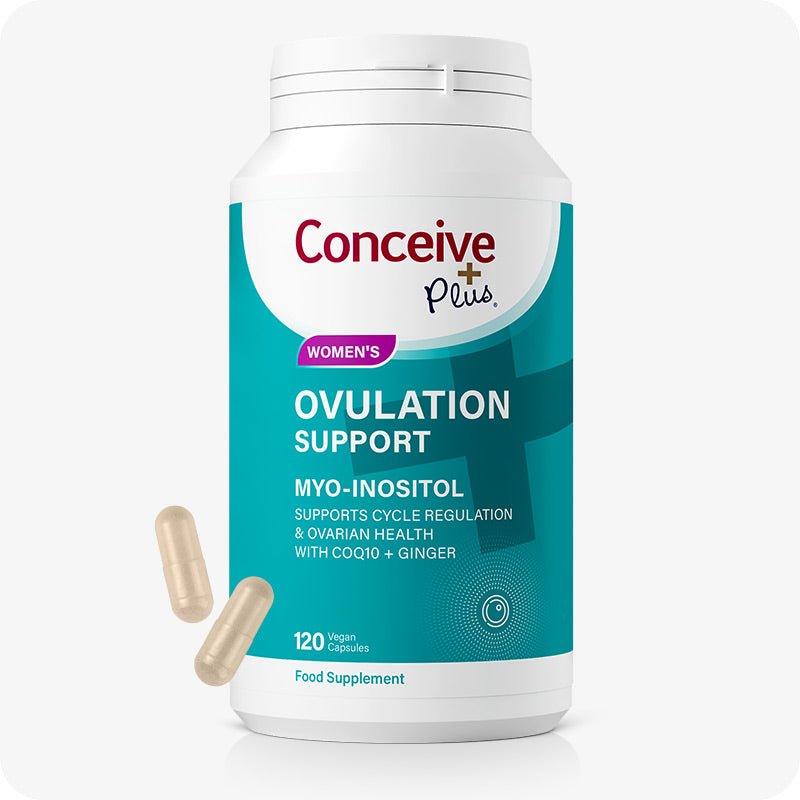
Inositol — particularly myo-inositol and D-chiro-inositol — has robust evidence for improving ovulation regularity and egg quality in women with PCOS. It works by improving insulin sensitivity, which reduces androgen levels and normalises the hormonal environment for ovulation. Even in women without PCOS, inositol has been shown to improve egg quality in IVF cycles. Typical dose: 4g myo-inositol + 400mcg folate daily.
Vitamin E
An antioxidant that protects egg cells from oxidative damage. It also supports endometrial thickness — a critical factor for implantation. Some research suggests vitamin E supplementation increases endometrial receptivity in women with thin endometrium.
Iron
Low iron stores can impair ovulation. The Harvard Fertility Study found non-haem iron (from plant sources or supplements) was associated with significantly lower rates of ovulatory infertility. However, iron supplementation should be based on blood test results — too much iron is harmful.
Essential Fertility Supplements for Men
Zinc
Zinc is perhaps the most critical mineral for male fertility. It is required for testosterone synthesis, sperm production, and protecting sperm DNA from oxidative damage. A meta-analysis of 20 randomised controlled trials found zinc supplementation significantly improved sperm count, motility, morphology, and testosterone levels in subfertile men. Found in high concentrations in the testes and seminal fluid.
Selenium
A trace mineral with powerful antioxidant properties. Selenium is incorporated into sperm during development and is essential for normal sperm morphology and motility. Low selenium levels have been correlated with poor sperm quality. Clinical trials show selenium supplementation improves motility and reduces DNA fragmentation.
CoQ10
Sperm mitochondria power the flagella — the tail that drives sperm forward. CoQ10 is concentrated in sperm mitochondria and directly supports motility. A 2012 systematic review found CoQ10 supplementation significantly improved sperm concentration and motility in infertile men. Dose: 200–300mg daily of ubiquinol.
L-Carnitine
An amino acid found in high concentrations in the epididymis (where sperm mature). L-carnitine fuels sperm energy metabolism and is critical for motility. Multiple randomised controlled trials have demonstrated significant improvements in sperm motility with L-carnitine supplementation — with best results seen in men with low motility (asthenozoospermia).
Vitamin C
Seminal plasma contains very high concentrations of vitamin C, which protects sperm DNA from oxidative damage. Studies show men with low vitamin C have higher rates of sperm DNA fragmentation. Supplementation (500–1000mg/day) has been shown to reduce DNA fragmentation and improve sperm quality.
Vitamin B12
B12 deficiency is associated with reduced sperm count and motility. B12 supports DNA synthesis during sperm production. Men following plant-based diets are particularly at risk of deficiency.
Folic Acid / Folate
Often overlooked for men, folate plays a role in sperm DNA integrity. Low folate intake has been associated with higher rates of sperm aneuploidy (abnormal chromosome numbers) — a major cause of miscarriage. The Dutch Folic Acid and Zinc Study found combined folate and zinc supplementation increased total normal sperm count by 74%.
What to Look For in a Fertility Supplement
Not all supplements are equal. When evaluating fertility supplements, look for:
- Active, bioavailable forms: Methylfolate over folic acid. Ubiquinol over ubiquinone. D3 over D2.
- Clinically relevant doses: Some "fertility" supplements contain token amounts of key nutrients. Check doses against research-supported levels.
- Third-party testing: Look for products tested for purity, potency, and contaminants.
- No unnecessary additives: Artificial colours, flavours, or fillers should be minimal.
- Specific fertility formulation: General multivitamins rarely contain fertility-specific nutrients at appropriate doses.
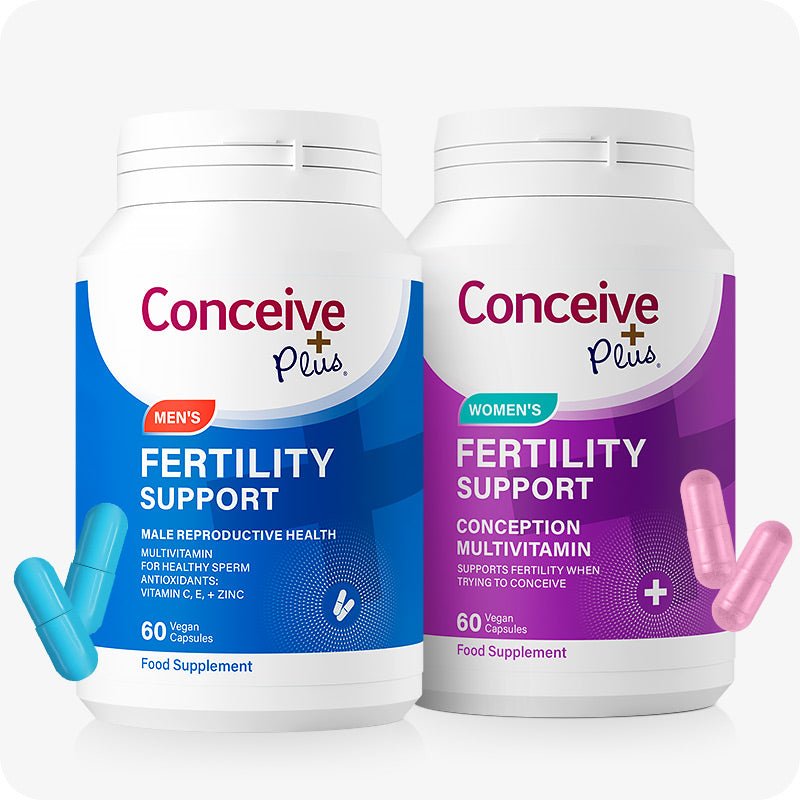
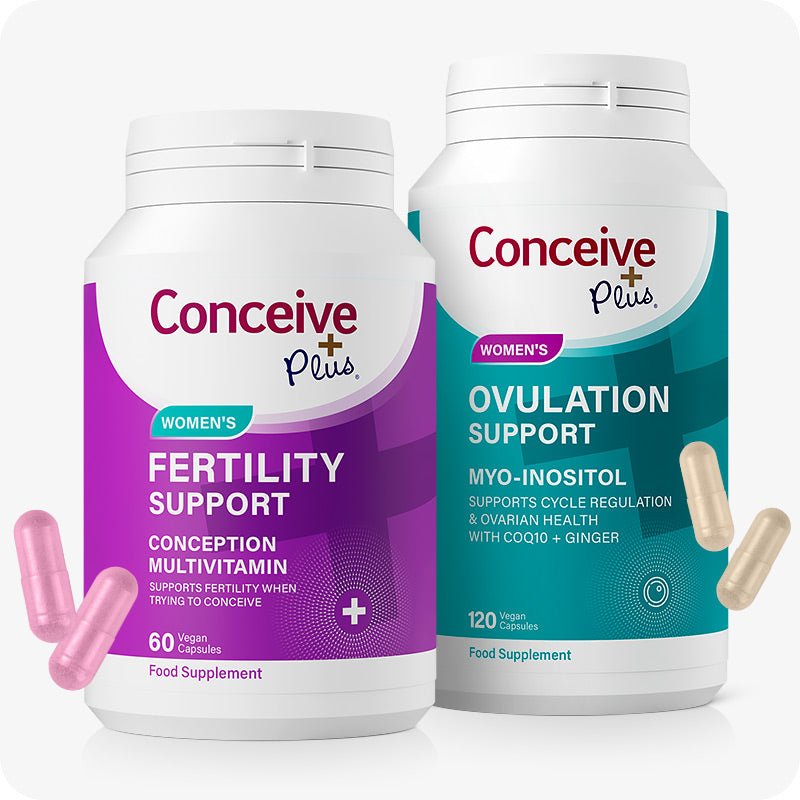
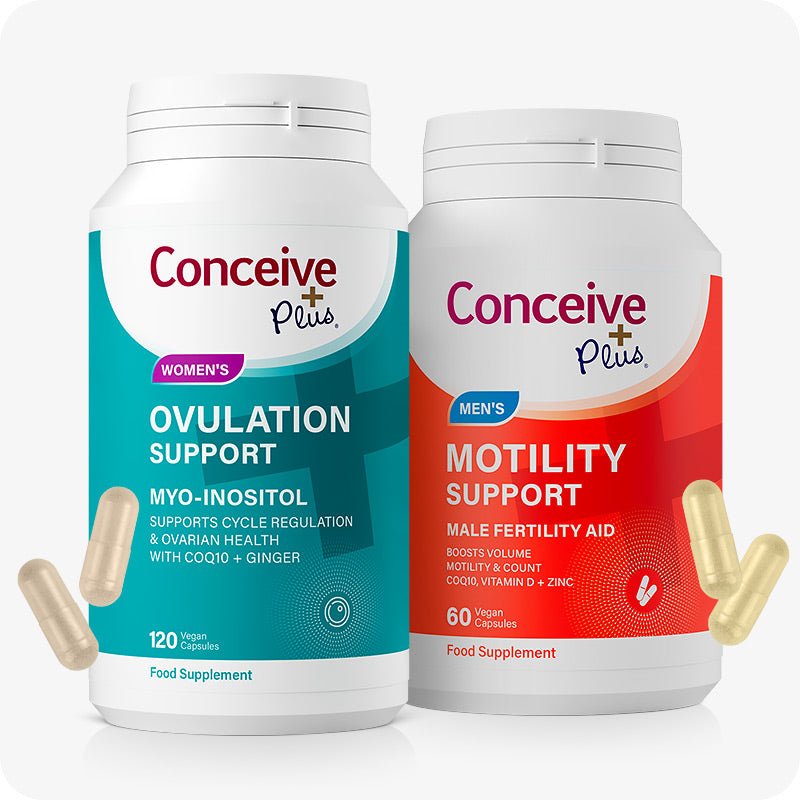
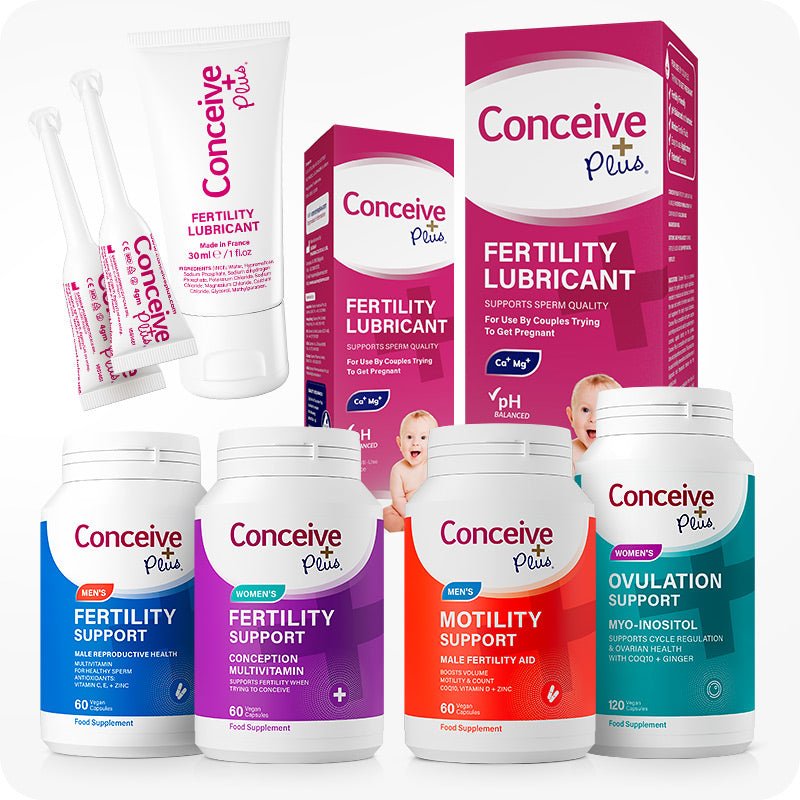
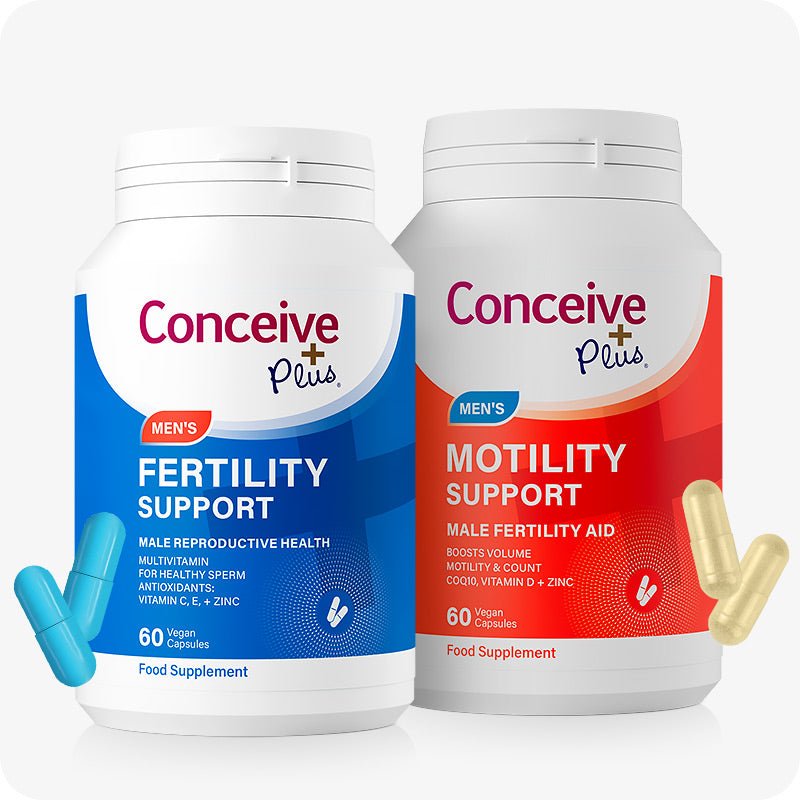
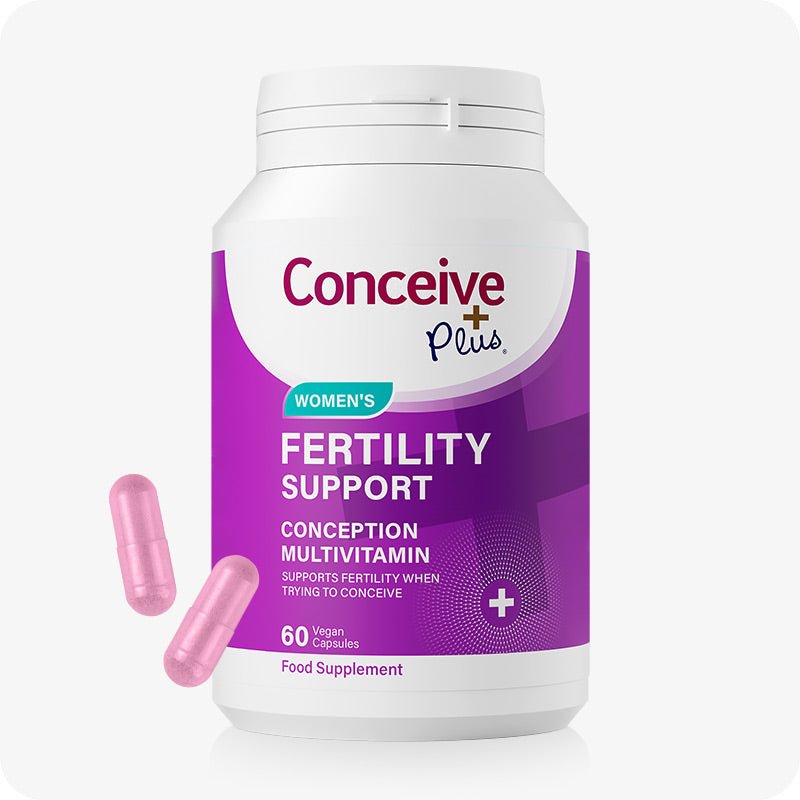
Conceive Plus fertility supplements are formulated specifically for preconception health, using bioavailable ingredient forms at clinically informed doses. Both women's and men's formulas are available, and a combined couples' approach addresses both sides of the fertility equation.
Supplements to Approach with Caution
Some supplements popular in TTC communities have limited or mixed evidence:
DHEA: May benefit women with diminished ovarian reserve (low AMH, poor IVF response), but should only be taken under medical supervision due to hormonal effects.
Vitex (Chaste Tree): Traditionally used for luteal phase support and irregular cycles. Evidence is limited and it may interact with hormonal medications. Discuss with your doctor.
Royal Jelly: Some preliminary research suggests potential fertility benefits, but clinical evidence in humans is limited.
Melatonin: Being studied for its antioxidant effects on egg quality. Some clinics incorporate it in IVF protocols. Not yet standard practice.
Always discuss any supplement with your healthcare provider, especially if you are undergoing fertility treatment.
Frequently Asked Questions
Q: When should I start taking fertility supplements?
A: Ideally 3 months before trying to conceive, to align with the egg and sperm development cycle. At minimum, start folate at least one month before conception.
Q: Can I take too many supplements?
A: Yes. Fat-soluble vitamins (A, D, E, K) accumulate in the body and can be toxic at high doses. Vitamin A in particular can be teratogenic. Always follow dosage guidelines and avoid stacking multiple supplements with the same nutrients.
Q: Do fertility supplements work for everyone?
A: Supplements can improve fertility when deficiencies or suboptimal nutrient levels are contributing factors. They cannot treat structural causes of infertility (such as blocked tubes or varicocele) and are not a substitute for medical evaluation after 12 months of trying (or 6 months if over 35).
Q: Should men take fertility supplements too?
A: Absolutely. Male factor infertility accounts for approximately 40–50% of all infertility cases. Zinc, selenium, CoQ10, L-carnitine, and folate have strong clinical evidence for improving sperm quality in subfertile men.
Q: Is folic acid or methylfolate better for fertility?
A: Methylfolate is superior for fertility purposes because it is the active, bioavailable form. Up to 40% of people have an MTHFR gene variant that reduces folic acid conversion. Conceive Plus uses methylfolate.
Q: Can fertility supplements help after IVF failure?
A: Supplements addressing egg quality (CoQ10, vitamin D, omega-3) or sperm quality (zinc, CoQ10, L-carnitine) may be beneficial between IVF cycles. Discuss with your fertility specialist before the next cycle.
Q: How long do fertility supplements take to work?
A: Consistent with the egg and sperm development cycles, meaningful improvement in quality typically requires 3 months of supplementation. Some hormonal effects (like vitamin D on ovulation) may be seen more quickly.
Q: Can I take fertility supplements alongside Clomid or other fertility medications?
A: In most cases yes, but always inform your fertility doctor of all supplements you are taking. Some supplements may interact with medications or be contraindicated in certain conditions.
Q: What is the best fertility supplement for PCOS?
A: Myo-inositol and D-chiro-inositol have the strongest evidence for PCOS specifically, alongside vitamin D and omega-3. Conceive Plus includes targeted nutrients to support hormonal balance.
Q: Are fertility supplements safe to take while breastfeeding?
A: Folate, vitamin D, omega-3, and other standard nutrients are generally safe during breastfeeding, but always check with your doctor before taking any supplement while breastfeeding.
Building Your Fertility Supplement Strategy
The most effective approach to fertility supplementation is targeted, evidence-based, and personalised. Start with the foundations — folate, vitamin D, omega-3, and antioxidants — and add specific nutrients based on your circumstances (age, PCOS diagnosis, IVF preparation, male factor).
Conceive Plus offers scientifically formulated fertility supplements for both women and men, making it simple to cover the essentials in a single, trusted product. Begin your preconception supplement routine today — your future family will thank you for it.
Ready to Start Your Fertility Journey?
Discover the full Conceive Plus range — scientifically formulated fertility support for both women and men.
Explore Conceive Plus Products →